The Stack Process
Stack began as an in-house experiment at Bill Amberg Studio, exploring the potential of leather not simply as a covering or upholstery material, but as a structural surface in its own right. At the same time, the process offered an inventive way to repurpose the leather offcuts generated through the Studio’s projects, transforming workshop waste into a durable, sustainable and highly distinctive material.
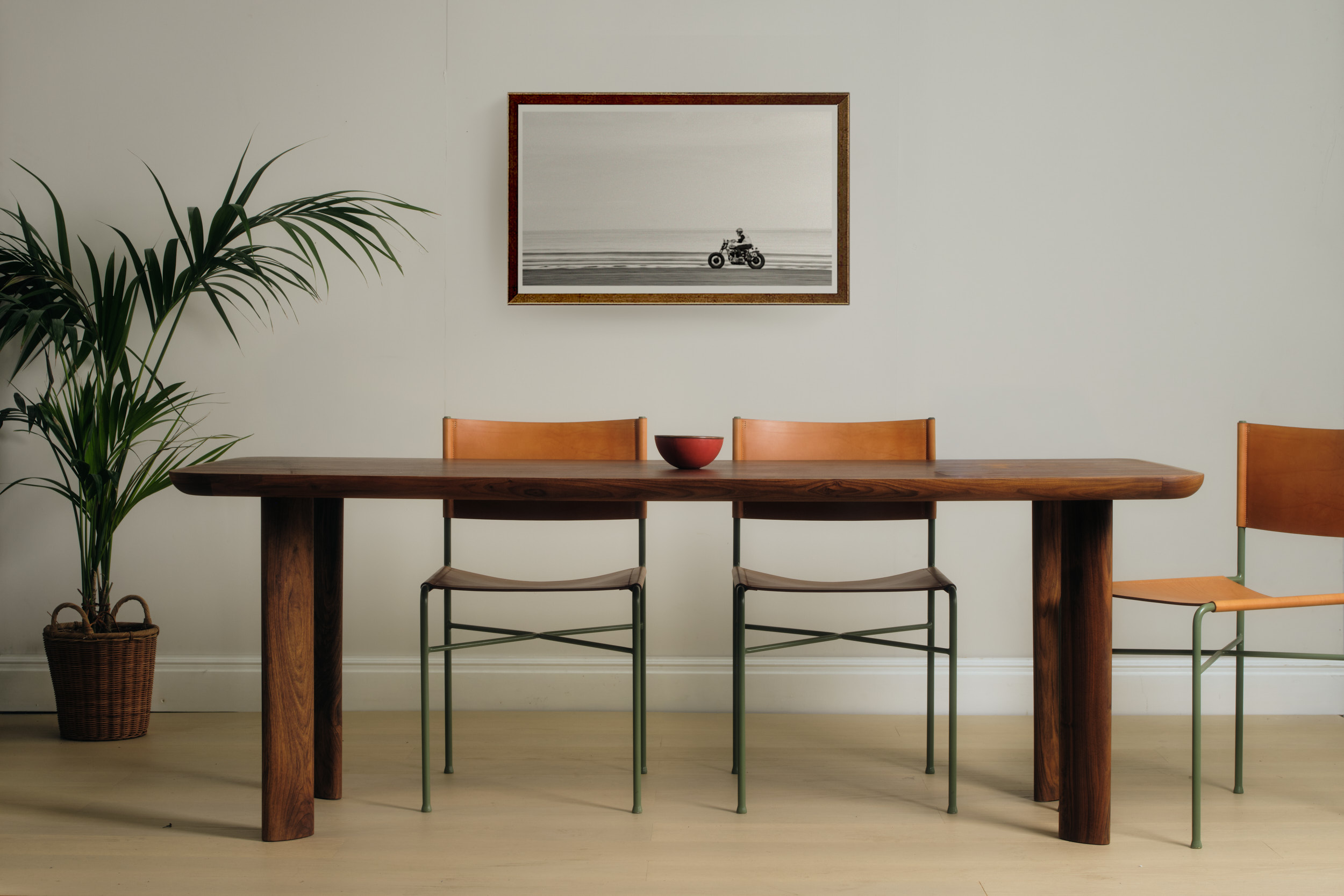
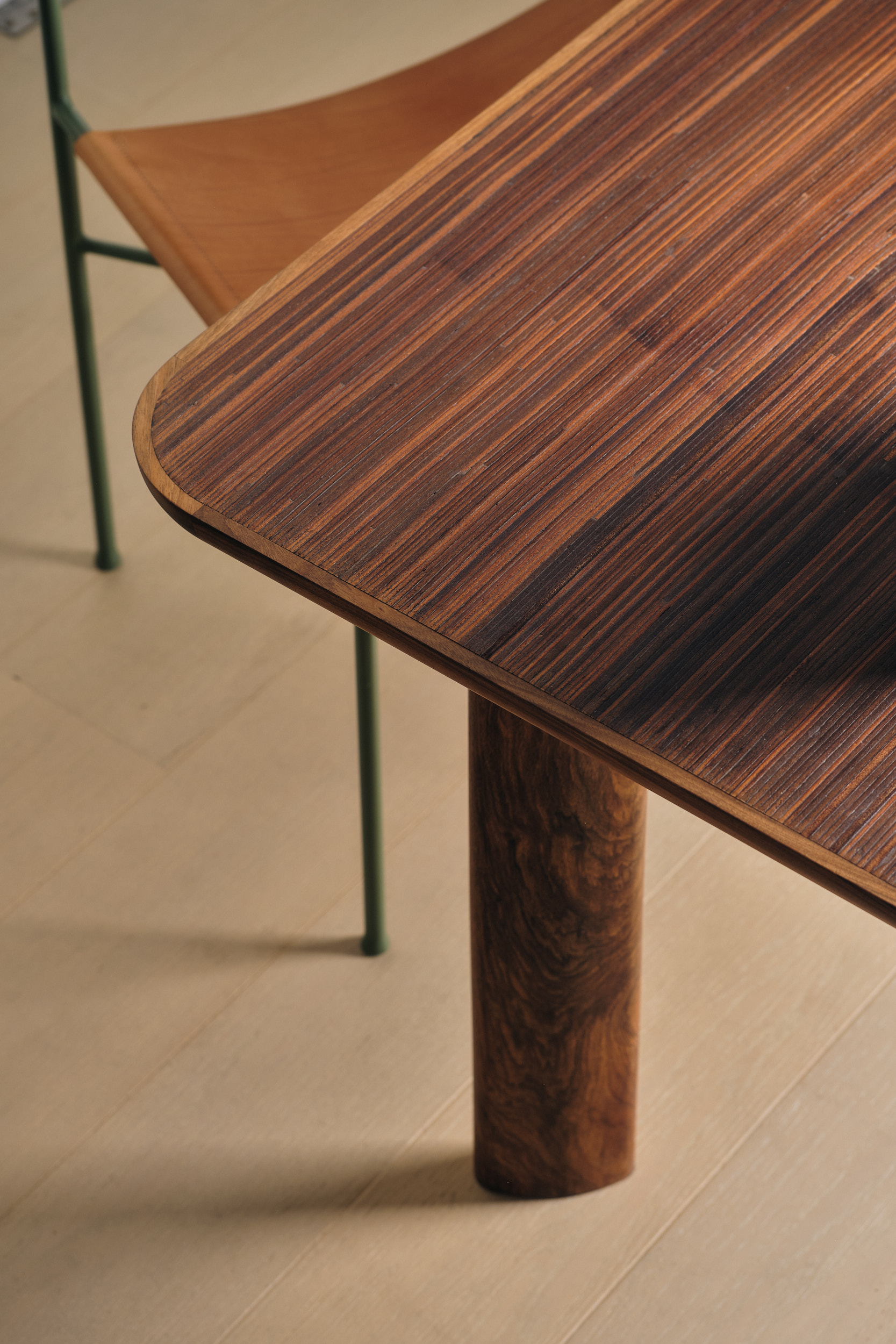
The technique takes its inspiration from the traditional construction of intricate leather shoe heels and the beautiful patina of well worn shoe soles, where multiple layers of leather are built up to create a solid structure. Stack reinterprets this principle by arranging hundreds of strips of leather laterally, exposing their characterful edges rather than their faces.
The individual leather off-cuts are prepared and assembled before being bonded together under immense pressure. The resulting block is then sanded back to reveal a smooth, stable surface. Because the leather originates from different Studio projects, variations in colour and thickness create a unique pattern of fine stripes across the finished material. Rather than imposing a predetermined decorative pattern, Stack allows its visual character to emerge naturally from the process itself.
The result is unexpectedly tactile: leather is still recognisable as the material, but its familiar qualities have been transformed. Viewed edge-on and compressed into a solid mass, it takes on an appearance and structural quality quite different from a conventional leather surface.
Following the success of the first Stack Table as a proof of concept, Bill Amberg developed and hand-built a dedicated machine capable of generating the considerable pressure needed to bond the prepared leather. This enabled the Studio to automate an otherwise highly labour-intensive stage of production and opened the technique to larger-scale and more varied applications.
Across these pieces, Stack has evolved from a single experimental table into an adaptable material language. Its defining qualities remain consistent: the repurposing of leather off-cuts, the transformation of a familiar material through an unconventional construction technique, and the balance between controlled craftsmanship and naturally occurring variation.
Every Stack surface is consequently entirely individual. Its pattern records the different leathers from which it was made, giving material that might otherwise have been discarded a new permanence and purpose. In this way, Stack brings together experimentation, craftsmanship and resourcefulness—demonstrating how the inherent qualities of leather can be reconsidered to create surfaces and objects that are durable, functional and visually distinctive.
The New Collection
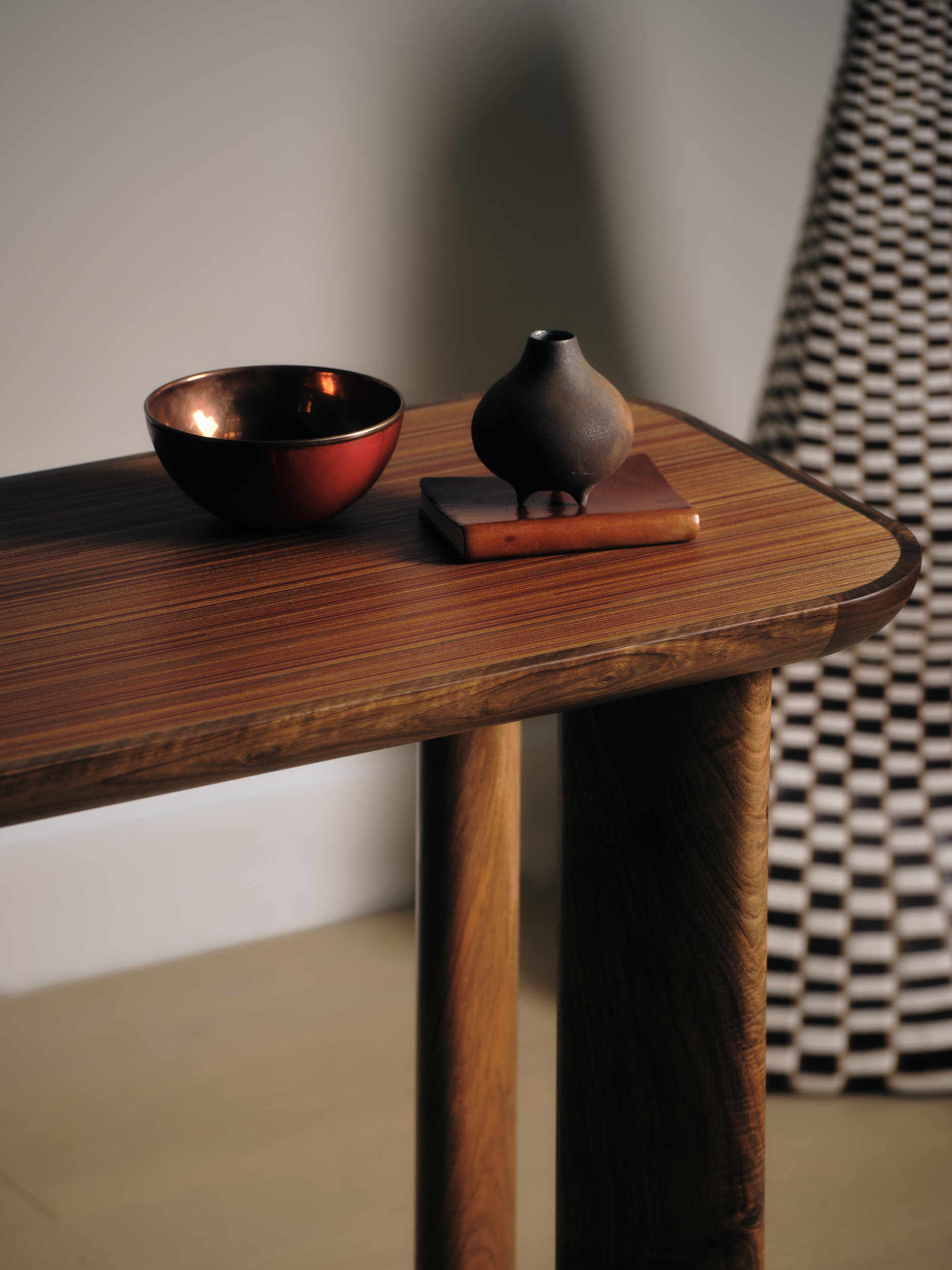
Today we are delighted to introduce four new pieces to build upon our initial Stack experiments – four tables of which three are made from English Walnut and one from English Oak. The Oak Coffee Table is a new addition to the Bill Amberg is constructed from Knepp cattle hides generated at the inspiring Sussex Estate that is home to Britain’s most pioneering re-wilding initiative. All four tables have a strong radiused edge which marries that tactility of the leather and wood to give a most unusual and satisfying modern hand-made feel.
Please enquire here for tables in the collection, dimensions and prices.